


Find License Plate Owner
4.081.00 Reviews
App Specs
- Version
- 1.0.5
- Updated On
- License
- Free
- Downloads
- 10,000+
- Developer
- ReverseLookup
- Categories
- Auto & Vehicles
- Platform
- Android
Screenshots
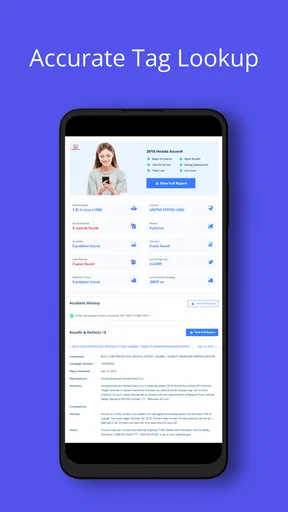
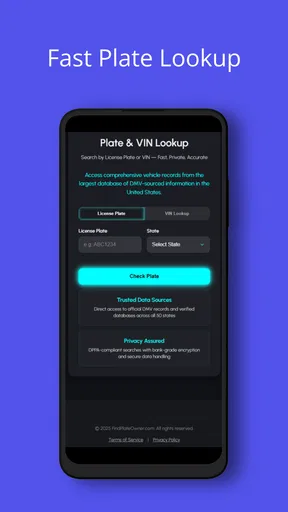
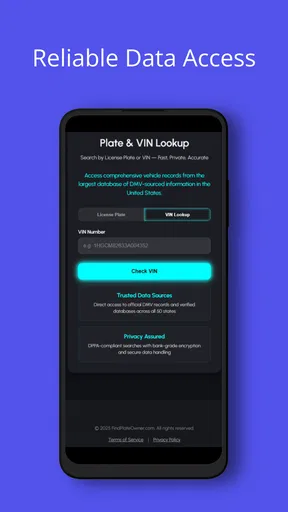
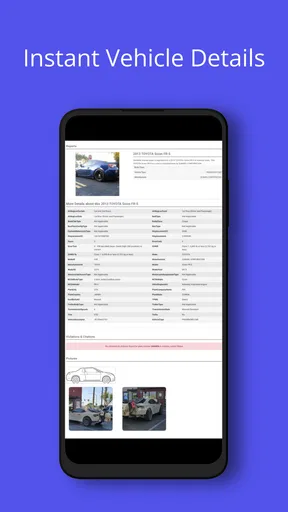
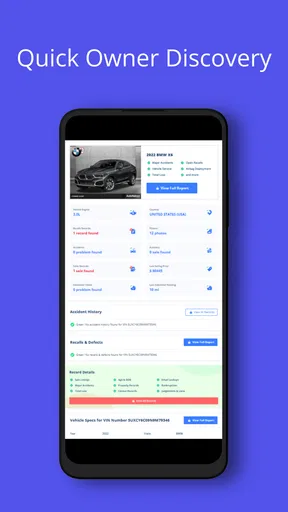
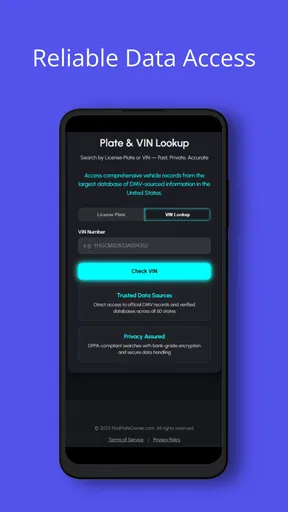
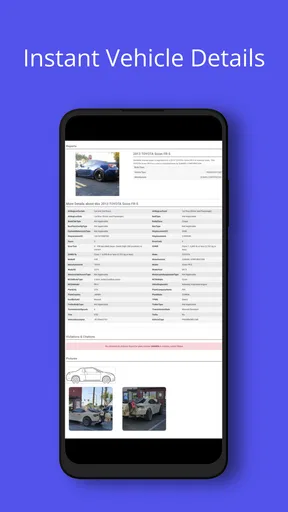
 Analysis by AppCompare
I approached Find License Plate Owner as a practical vehicle-information tool rather than a magic answer box. Its purpose is straightforward: enter a license plate or VIN, use a private lookup service, and follow official source links when they are available. That sounds useful, but it also touches information that can be sensitive, so the real question is not only whether the app is convenient. It is whether the app helps me make careful, informed choices while I search.
In my experience, this is the kind of app that makes the most sense in a specific situation: I have a legitimate reason to check a vehicle and want a focused starting point instead of searching through unrelated websites. It belongs to the Auto & Vehicles category, is free to install, and is published by ReverseLookup. The audience rating is Everyone, which makes the interface approachable for general users, but that label should not be confused with permission to investigate anyone for any reason.
The app has reached over ten thousand installs and holds a 4.0 average from roughly a hundred ratings, with more than eighty written reviews. Those figures suggest that people are finding a useful purpose for it, although they also tell me to keep expectations realistic. A lookup app can organize a search and point me toward official sources; it cannot turn every plate or VIN into a complete, guaranteed personal profile.
What I found when judging the app’s trust context
The first thing I noticed about the concept is the distinction between a private lookup service and an official source. The app’s summary presents the private service as the search route, while official source links provide a path toward primary information. That separation matters. A private result may be convenient, but an official source is usually the place I would want to consult before making an important decision.
I would use the app as a research assistant, not as final proof. For example, if I were considering a used vehicle from a private seller, I could start with the VIN to organize my questions. I would then compare anything relevant with the vehicle itself, the seller’s documents, and the appropriate government or registration source. That workflow is more reliable than treating a single screen as a complete history report.
The same caution applies to license plate searches. A plate can help identify a vehicle-related record or direct me toward a useful source, but it should not encourage me to chase a private individual. I would never use a lookup result to confront someone, publish personal details, or make an accusation. The app is more defensible when used for vehicle checks, paperwork preparation, or a legitimate incident involving the user’s own car.
One practical strength is that the app brings plate and VIN lookup into the same place. Those two identifiers serve different purposes. A plate is visible in everyday situations and may change when a vehicle is sold or re-registered. A VIN is tied more closely to the vehicle itself and is normally found on the car or its documents. Knowing which identifier I am using prevents a common mistake: assuming that a plate search and a VIN search should produce identical results.
Worth Reading Before You Choose

EA SPORTS FC Mobile 26 Is a Bigger Football Game, but It Takes Time

Flipboard Shows What News Apps Must Do Beyond the Feed

Switching to Android Auto Means Rethinking Your Driving Routine

Google Calendar Makes a Crowded Week Easier to Manage

Ludo King Makes the Most of the Minutes Between Plans

Baby Panda World Brings Quick Play to Modern Phones, but Its Game Library Feels Busy
I also appreciate the presence of official source links because they create a natural verification step. When a result matters, I would open the referenced official source, read its own instructions, and check whether the record applies to my location and situation. This is especially important before buying a vehicle, reporting damage, or relying on information in a dispute.
How I would use it before buying a used car
My preferred workflow would begin before meeting the seller. I would ask for the VIN rather than relying only on a plate, enter it carefully, and save the questions raised by the result. I would then inspect the VIN on the vehicle to make sure it matches the paperwork. If the seller refuses to provide the identifier or the number appears inconsistent, that is useful information in itself.
At the viewing, I would compare the app’s lead with the physical car. I would check the visible VIN location, registration documents, mileage display, and signs of repair. The app cannot replace an inspection, a mechanic, or a proper title check. Its best role is helping me decide what deserves closer attention before I spend money or sign anything.
A less obvious benefit is that this process reduces rushed decisions. Instead of asking, “Does the result look good?” I can ask, “What should I verify next?” That change in mindset is important. A clean-looking lookup is not a guarantee, while an unusual result is not automatically proof of wrongdoing. Both are prompts for further checking.
What the private-service wording means in practice
The phrase “private service” makes me more careful about how I interpret results. I would expect the app to act as an intermediary rather than assuming that every displayed detail is a direct government record. That does not make it useless, but it does affect how much confidence I place in an entry and whether I am willing to pay attention to the source behind it.
Because the app is free, it is easy to try without committing money at the installation stage. That lowers the barrier for a quick vehicle check. Still, free access does not automatically mean that every lookup outcome will be complete, current, or equally detailed. I would examine the screen for source context and follow the official link when I need a decision-grade answer.
There is also a privacy trade-off whenever I submit an identifier connected to a vehicle. Before entering a plate or VIN, I would pause and consider whether the search is necessary, whether I am using the correct identifier, and whether the result could expose information about someone else. I would avoid entering identifiers from a casual photograph or sharing screenshots that reveal more than the intended recipient needs to see.
Controls, choices, and moments that deserve extra care
The app’s current version is 1.0.5, and I would treat that as a reason to keep my expectations measured. A focused tool can still be useful at this stage, but I would pay close attention to the exact wording on each screen. I would not assume that a button labeled as a lookup, source, or result means the same thing as an official record.
One of the most important user controls is the decision about what to search. Plate and VIN searches are not interchangeable, so I would select the identifier that matches my legitimate purpose. If I am checking a car I may buy, the VIN is generally the more sensible starting point. If I am dealing with a vehicle-related event where only a plate is available, I would use the plate but keep the result in context.
Another meaningful control is whether I continue to an official source. I would use that option whenever the result affects safety, ownership, registration, insurance, or a financial decision. The private lookup can save time, while the official destination can help me understand the authoritative process. The safest habit is to treat the app as the beginning of verification, not the end.
I would also avoid entering information merely out of curiosity. That may sound obvious, but vehicle identifiers are easy to collect in public and tempting to search. A responsible use case has a clear reason behind it: checking my own vehicle, evaluating a purchase, preparing for a legitimate report, or confirming information connected to a real transaction.
For families, the Everyone rating makes the app broadly approachable, but I would still explain the privacy side before letting a younger user search. The age label describes suitability in general terms; it does not teach good judgment about personal information. I would encourage anyone using it to avoid sharing results publicly and to ask an adult before acting on a troubling result.
A realistic everyday scenario
Imagine I am meeting a seller in a supermarket parking lot to see a used car. The seller has advertised the vehicle with a plate number but has not included a full history. Before I leave home, I could use the plate as an initial lead. At the meeting, I would ask to see the VIN and compare it with the car and documents. If the identifiers do not line up, I would stop the process rather than trying to explain the inconsistency away.
If the search points me toward an official source, I would use it to understand the next verification step. I would also ask the seller direct questions about ownership, damage, service records, and the reason for selling. If the app produces little useful information, I would not interpret that as a clean bill of health. I would arrange an inspection and use the relevant registration or title process instead.
This scenario shows the app’s strongest practical role: it can help me prepare and notice questions early. Its weakness is equally clear: it cannot inspect the vehicle, judge the seller’s honesty, or guarantee that every relevant record is visible. That balance is why I would use it before a purchase but never as the only condition for buying.
How it compares with familiar alternatives
The usual alternative is searching directly through government vehicle agencies, registration offices, insurance channels, or paid history-report services. Direct official searches may be slower or more location-specific, but they are the better choice when I need formal confirmation. Paid reports may gather more history in some situations, but they can involve costs and still deserve careful interpretation.
Find License Plate Owner sits between those options. It is more convenient than starting from a blank browser search, and its official source links can help me move toward the right authority. At the same time, I would not expect the convenience of a single app to replace the depth or legal relevance of a specialized official process.
For a quick first pass, I would choose this app over random search results because the purpose is clearly focused on plates and VINs. For a serious purchase, a legal matter, or a question involving ownership rights, I would use it alongside—not instead of—the appropriate official channel. That is the trade-off: speed and focus in exchange for the need to verify carefully.
Questions I would answer before installing
Would I use it for my own vehicle? Yes. It could be a convenient way to organize a first check and find a relevant official source. I would still compare the result with my documents and the vehicle itself, especially if the search is connected to an insurance claim, sale, or registration issue.
Would I rely on it to identify a private person? No. Even if a search appears to reveal something personal, I would not treat that as an invitation to contact, expose, or accuse anyone. The responsible use is vehicle-focused and tied to a legitimate need.
Is a plate search enough when buying a car? I would consider it a preliminary step only. I would request the VIN, verify that it matches the vehicle, inspect the paperwork, and use the official source linked by the app when appropriate. A plate can be useful, but it is not a substitute for checking the vehicle’s identity.
What should I do if the result looks wrong? I would recheck every character, confirm whether I searched a plate or VIN, and compare the result with the physical identifier. If the mismatch remains, I would pause the transaction and seek confirmation through the relevant official authority rather than trying the same search repeatedly and hoping for a different answer.
Who should skip this app? I would skip it if I need a formal certified record, a complete professional history report, or a definitive legal answer. I would also avoid it if my only motive is curiosity about another person’s car. In those cases, the app is either not authoritative enough for the task or not appropriate for the purpose.
My cautious verdict on Find License Plate Owner
I see Find License Plate Owner as a useful first-stop tool for people who need to connect a plate or VIN search with a more informed vehicle-checking process. Its free availability, focused purpose, and official source links make it easy to try. The 4.0 average from its current user feedback gives it a reasonable level of interest, while the relatively modest install base tells me to judge it by practical usefulness rather than popularity alone.
My recommendation comes with a firm boundary: use it to gather leads, organize questions, and reach the right source. Do not use it as proof of ownership, a complete vehicle history, or a reason to expose somebody else’s information. I would be especially careful before sharing screenshots or repeating a result that has not been confirmed through an appropriate official channel.
For a used-car shopper, an owner checking a vehicle-related issue, or someone who wants a focused route to plate and VIN resources, the app is worth trying. For high-stakes decisions, I would pair it with direct official verification and an in-person inspection. My final view is positive but deliberately cautious: it can make the first step easier, provided I remain in control of what I search, why I search it, and how I verify what comes back.
ReverseLookup has made a tool that is simple to understand, but the responsibility around it belongs with the user. I would install it for a legitimate vehicle question, follow the source trail, protect other people’s information, and stop whenever the result becomes more consequential than the app can responsibly establish.
Pros
- Simple interface makes searches easy to navigate.
- Useful for checking vehicle details before a private sale.
- May help identify a vehicle after an incident.
- Search results can be accessed quickly when data is available.
- Supports informed decisions when buying a used vehicle.
Cons
- Owner information may be restricted by privacy laws.
- Results can vary significantly by state or country.
- Some searches may require payment or credits.
- Outdated records can lead to inaccurate vehicle details.
- A license plate alone may not confirm the current owner.
FAQs for Find License Plate Owner
What is Find License Plate Owner, and how does it work?
Find License Plate Owner is an app designed to help users search for publicly available information associated with a vehicle license plate. Depending on your country and the available databases, it may provide basic details such as vehicle type, registration status, or related records. It should not be assumed to reveal a private individual’s identity, address, phone number, or other confidential personal information.
Can Find License Plate Owner identify the person who owns a vehicle?
In most regions, the app cannot legally provide a private owner’s name or personal contact details because vehicle-registration information is protected by privacy laws. Results generally depend on public records, local regulations, and the data sources used by the service. Treat any displayed information as a reference only, and do not use it to harass, monitor, threaten, or identify someone without a legitimate reason.
Is Find License Plate Owner available in every country and region?
No. The app’s coverage can vary significantly by country, state, or province. Some areas offer searchable public vehicle information, while others restrict access to authorized government agencies, insurers, law-enforcement personnel, or licensed professionals. Before downloading, check the app description, supported locations, and user reviews to confirm that it can actually process license plates from your region.
Is Find License Plate Owner free to use?
The download may be free, but some searches or advanced features can require payment, credits, a subscription, or in-app purchases. Pricing and available tools may differ between Android and iOS versions and can change over time. Review the store listing and payment terms carefully before entering billing information, especially if the app offers a free trial that automatically renews.
Is it safe and legal to use Find License Plate Owner?
Using the app for legitimate purposes, such as checking information about your own vehicle or verifying details after an accident, may be acceptable, but legality depends on local privacy and data-protection laws. Avoid uploading unnecessary personal information, review the requested permissions, and use only official app-store versions. Never rely on an unverified result for legal, insurance, employment, or safety decisions.


